
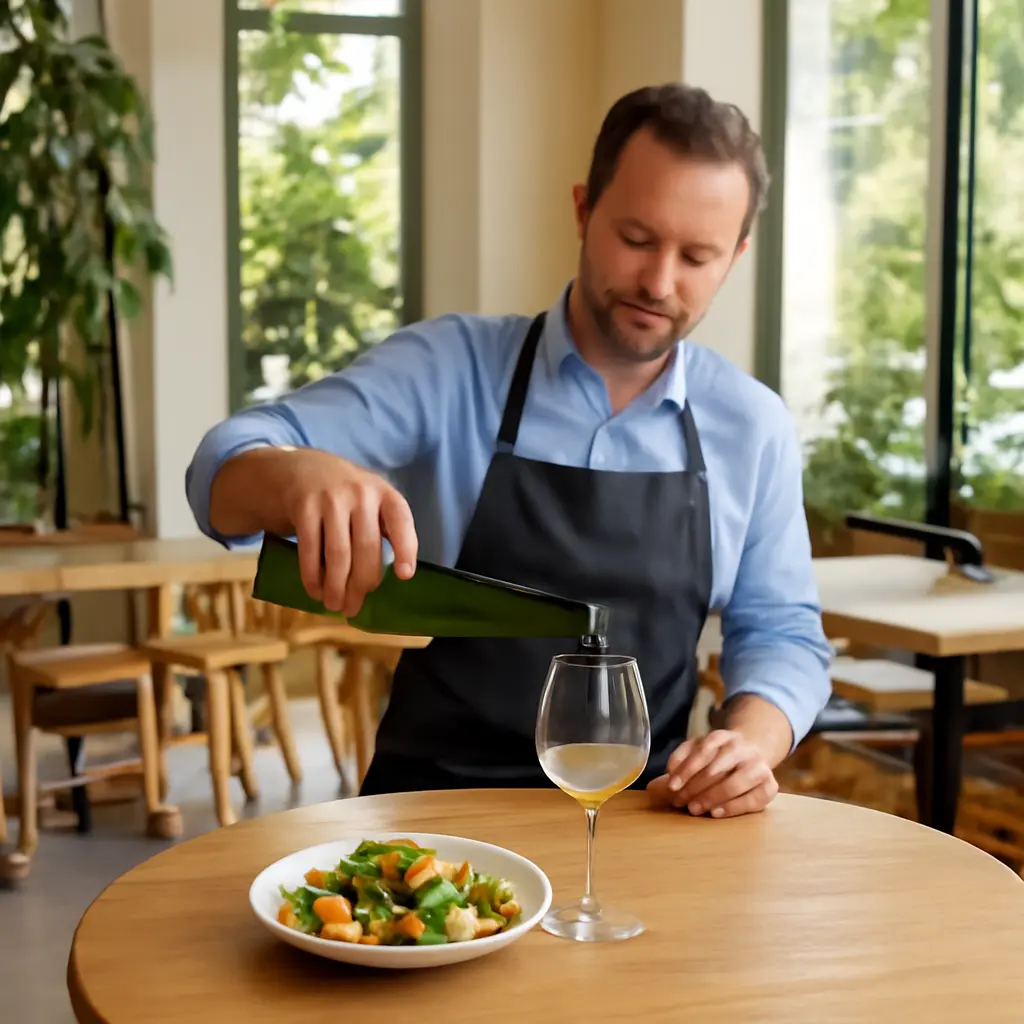
Vegetable-driven plates—meals in which vegetables shape the dish rather than simply accompany meat—are giving wine lists a fresh opportunity: pairing by texture, acidity, aroma, and cooking method instead of defaulting to red wine with meat and white wine with fish. The shift reflects both evolving restaurant menus and a sizeable market: the International Organisation of Vine and Wine reported global wine consumption of about 214 million hectolitres in 2023, while the National Restaurant Association has identified plant-forward choices as a continuing menu trend. For diners and restaurants, the practical lesson is that vegetable-focused food can pair confidently with sparkling, white, rosé, orange, and lighter red wines—provided the wine responds to the dish’s seasoning, richness, and preparation.
Wine Pairing Gives Vegetable-Driven Plates More Range
A vegetable-driven plate is a dish organized around vegetables, legumes, grains, or mushrooms, with animal products optional or secondary. Wine writer and educator Karen MacNeil describes pairing as a way to create a satisfying relationship between a wine’s qualities and a food’s qualities; in practical terms, that means considering acidity, sweetness, tannin, alcohol, aroma, and weight together rather than choosing wine by a single ingredient.
This approach matters because vegetables are not one flavor category. Asparagus can be grassy and bitter, roasted squash sweet and dense, mushrooms savory and earthy, and tomatoes sharply acidic. Cooking and seasoning change the equation further: grilling adds smoke, frying adds fat, and lemon or vinegar can make a wine seem less fresh. The pairing opportunity is therefore broad, but it rewards attention to the whole plate.
The commercial backdrop is significant. OIV estimated 2023 global wine consumption at 214 million hectolitres, down 2.6% from 2022, amid economic pressure and changing consumption patterns. In that environment, restaurants can use vegetable-centered dishes and thoughtful wine pairings to offer diners distinctive experiences without relying on large portions of meat or expensive bottle selections.
Pair by preparation, not only by vegetable
Preparation often has more influence than the vegetable’s name. Raw fennel and citrus call for a crisp, aromatic wine; roasted fennel with browned butter can handle more texture and richness. A lightly oaked Chardonnay may work with grilled corn, while a high-acid Sauvignon Blanc can refresh a salad dressed with herbs and lemon. The useful rule is to match the wine to the dish’s strongest features—such as char, creaminess, acidity, or sweetness—rather than treating every vegetable as delicate.
The menu shift has measurable support
The National Restaurant Association’s annual industry research has repeatedly tracked consumer interest in plant-based and vegetable-forward dining. Its 2024 culinary forecast placed sustainability and locally sourced foods among notable menu themes, while the association’s broader industry reporting underscores restaurants’ need to respond to changing consumer preferences. These findings do not mean every diner is vegetarian; they indicate that vegetable-led choices have become a mainstream part of menu planning.
Acidity and Texture Make Vegetable-and-Wine Pairings Work
Acidity is the bright, mouthwatering quality in wine that can refresh the palate and complement foods with citrus, tomatoes, pickles, or vinaigrette. Tannin is the drying sensation often associated with red wines; it can become harsh beside delicate vegetables, but works more comfortably with charred, roasted, or deeply savory dishes. These properties provide a practical starting point for selecting wine styles.
High-acid wines for green vegetables and bright dressings
Sauvignon Blanc, Albariño, Grüner Veltliner, dry Riesling, and traditional-method sparkling wine typically offer refreshing acidity. They can suit asparagus, peas, artichokes, green herbs, and salads, especially when the dish includes lemon or a sharp vinaigrette. With notoriously tricky ingredients such as asparagus and artichoke, a dry, aromatic white or sparkling wine is often a safer choice than a strongly tannic red.
A simple example is grilled asparagus with lemon and olive oil alongside Grüner Veltliner: the wine’s freshness meets the citrus, while its herbal notes echo the vegetable. A creamy asparagus soup calls for a different expression; a fuller-bodied white can meet the soup’s weight without overwhelming its flavor.
Rosé and sparkling wine for varied plates
Dry rosé and sparkling wine are flexible options when a meal combines several vegetables or contrasting flavors. Rosé can bridge the freshness of a salad and the savory character of grilled eggplant. Sparkling wine’s acidity and bubbles can cut through fried vegetables, tempura, or rich dips. For example, a dry sparkling wine can provide contrast to crispy cauliflower, while a fruit-forward rosé can complement tomatoes, peppers, and herbs.
The key is sweetness level. A dry wine tends to suit savory dishes, while a slightly off-dry Riesling can be more accommodating when the plate includes chili heat or a sweet glaze. A very dry wine may taste sharp next to sweetness, and a high-alcohol wine can intensify the sensation of chili.
Cooking Method Expands the Vegetable Wine Pairing Map
Cooking changes flavor through browning, concentration, smoke, and added fat. The Maillard reaction—the chemical process responsible for browning in cooked foods—creates roasted aromas and savory depth. Those changes can make vegetables more compatible with wines that have greater body, texture, or modest tannin than the raw ingredient would suggest.
Roasted and grilled vegetables welcome fuller wines
Roasted squash, caramelized onions, grilled mushrooms, and charred eggplant have concentrated flavors that can stand up to richer whites and lighter reds. Chardonnay, dry Chenin Blanc, Pinot Noir, and Grenache are useful options depending on the dish’s seasoning. A roasted mushroom tart, for instance, can pair with Pinot Noir because the wine’s earthy character relates to the mushrooms, while its moderate body avoids overpowering pastry and herbs.
For smoked or heavily charred vegetables, a wine with some fruit and a rounded texture can soften the bitter edge of char. Avoid assuming that every grilled dish needs a powerful red: high alcohol and heavy tannin may overwhelm vegetables, especially if the plate is lightly seasoned.
Fermentation and umami call for careful matching
Miso, soy sauce, aged cheese, olives, and fermented vegetables contribute umami and salt. Umami can make some wines seem less fruity or more bitter, particularly when paired with assertive tannins. Lower-tannin reds such as Pinot Noir, or textured whites such as Chenin Blanc, can be more adaptable. A mushroom-and-miso dish may also work with sparkling wine, whose acidity refreshes the palate between savory bites.
Salt can soften the perception of tannin, but the entire seasoning profile still matters. A salty, earthy plate may welcome a light red; the same dish with a strong vinegar dressing may be better with a crisp white. Taste the finished dish, not just its main ingredient, before choosing a bottle.
Natural and Low-Intervention Wines Add Another Dimension
Low-intervention wine is a broad term rather than a single regulated style. It generally describes wines made with limited additions or manipulation, though practices vary between producers. Such wines may be cloudy, lightly sparkling, or more aromatic than conventional examples, making them an intriguing match for vegetable-focused cooking—but the category itself does not guarantee quality or suitability.
Orange wine with spice, herbs, and texture
Orange wine is white wine made with extended skin contact, which can contribute color, grip, and tannin-like structure. That texture can work with roasted carrots, squash, legumes, and dishes seasoned with warm spices. A skin-contact wine may also match the savory depth of grilled vegetables more effectively than a very light white, particularly when the plate includes nuts or fermented ingredients.
Because skin-contact wines range from delicate to powerful, match intensity carefully. A lightly extracted wine can complement herbs and vegetables; a more tannic version may need a richer dish. The term “orange wine” describes a winemaking approach, not a fixed flavor profile.
Biodynamic and organic labels need context
Organic and biodynamic certifications concern vineyard and production practices; they do not, by themselves, predict how a wine will taste with food. The European Commission’s organic rules, for example, establish requirements for organic production and labeling in the European Union. Diners interested in sustainability can use certification as one piece of information, then assess the wine’s acidity, body, and flavor for the pairing itself.
Restaurants can make these choices easier by listing a wine’s style and flavor cues rather than relying only on unfamiliar production terms. “Crisp, citrus-led white” or “light red with gentle tannin” helps diners connect the bottle to a vegetable dish, whether or not they know the vineyard’s certification.
Restaurants Can Turn Vegetable Pairing into a Better Guest Experience
A wine pairing program for vegetable-driven food is most effective when it offers several styles by the glass and describes them in accessible language. A short list might include a high-acid white, a dry rosé, a sparkling option, a textured skin-contact wine, and a light red. This range gives servers practical alternatives for dishes that vary in acidity, heat, richness, and smoke.
A practical tasting sequence
Restaurants and home cooks can test a pairing with a simple sequence: taste the food alone, taste the wine alone, then taste them together. Notice whether the wine becomes sour, bitter, flat, or more expressive. Adjust for the dish’s dressing, garnish, and sauce, since those elements often affect the match more than the vegetable itself.
- For raw greens, herbs, citrus, and vinaigrette, start with crisp, high-acid whites or sparkling wine.
- For roasted roots, squash, and browned onions, try textured whites or lighter reds.
- For fried vegetables and creamy dips, consider sparkling wine or a fresh, dry rosé.
- For mushrooms, miso, and other savory flavors, test lower-tannin reds or structured whites.
- For chili heat, avoid high-alcohol wines and consider a slightly off-dry style.
A seasonal example: a vegetable-led tasting plate
Imagine a plate of charred spring onions, asparagus, peas, and a lemon-herb dressing. A crisp white can match its green aromatics and acidity. If the plate shifts to grilled onions, roasted mushrooms, and a nut-based sauce, a light red or textured white may work better. The example shows why a flexible by-the-glass list can serve vegetable dishes more effectively than a simple red-for-meat, white-for-fish rule.
Conclusion: Vegetable-Driven Plates Are Reshaping Wine Pairing
Vegetable-driven plates are broadening wine pairing by making preparation, acidity, texture, and seasoning the central guideposts. High-acid whites and sparkling wines refresh bright or fried dishes; rosé bridges mixed flavors; textured whites and lighter reds suit roasted, smoky, and savory plates; and orange wines can bring structure to richly seasoned vegetables. Market data from OIV and restaurant-industry research provide context for why these choices matter as dining habits and menus evolve.
For diners, the next step is to taste beyond traditional pairing rules and ask how the wine meets the complete dish. For restaurants, a varied, clearly described wine selection can make vegetable-led cooking feel intentional rather than secondary. Explore a seasonal vegetable menu with a few contrasting wine styles, and let the pairing—not an old rule—decide what belongs in the glass.
Sources: International Organisation of Vine and Wine, State of the World Vine and Wine Sector in 2023, https://www.oiv.int/press/state-world-vine-and-wine-sector-2023; National Restaurant Association, What’s Hot 2024 Culinary Forecast, https://restaurant.org/research-and-media/research/research-reports/whats-hot-2024-culinary-forecast/; Karen MacNeil, The Wine Bible, https://www.workman.com/products/the-wine-bible-3rd-edition; European Commission, Organic production and products, https://agriculture.ec.europa.eu/farming/organic-farming/organic-production-and-products_en