
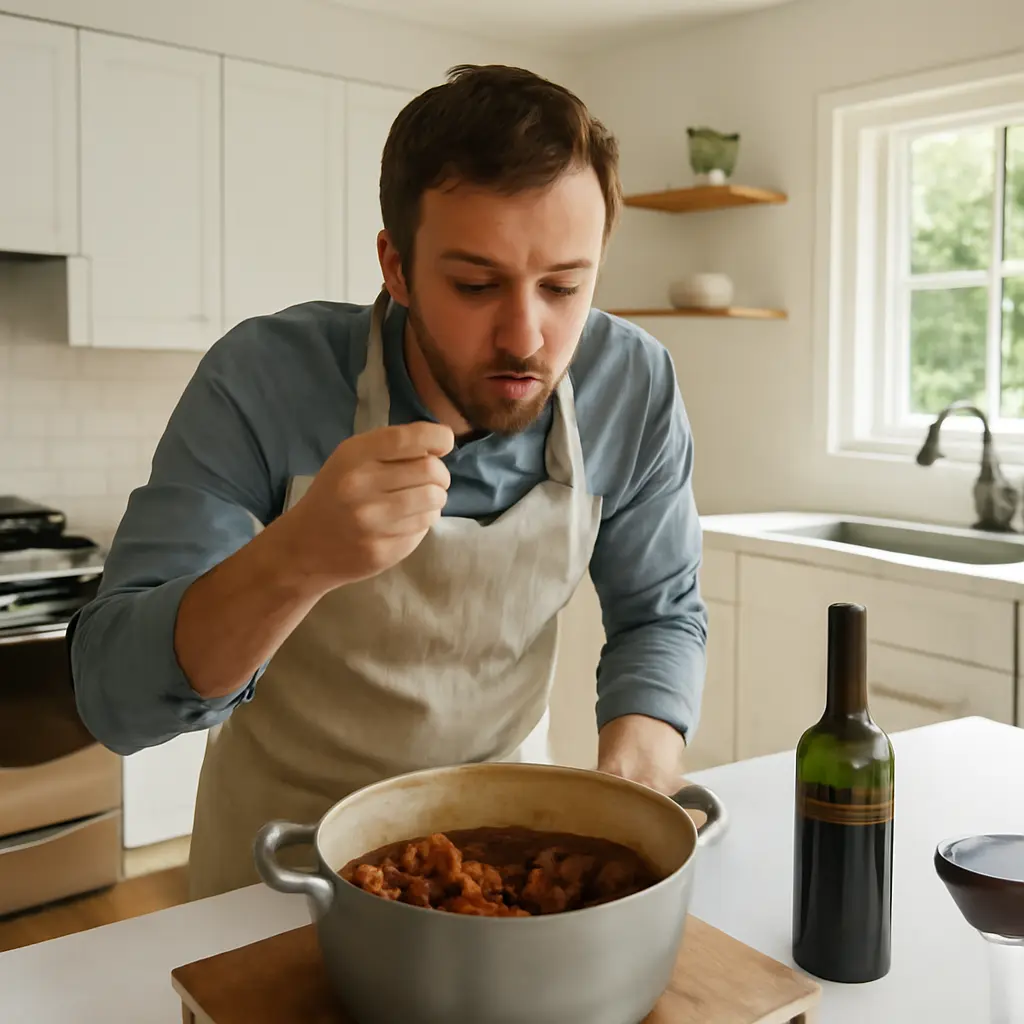
Braising changes both a food’s texture and its flavor: slow cooking in a covered pot with a modest amount of liquid softens connective tissue, concentrates savory compounds, and lets the cooking liquid absorb flavor from meat or vegetables. That transformation makes wine choice less about matching the raw ingredient and more about balancing the finished dish’s richness, salt, acidity, sweetness, and sauce. For meat braises, a dry wine with enough acidity and moderate tannin is often a flexible choice; for lighter poultry or vegetable braises, a crisp white may fit better. The right bottle can contribute to the braise and work at the table, while the wrong one may make an already concentrated sauce taste harsh, flat, or overly sweet.
Braising transforms flavor and changes wine-pairing priorities
Braising is a combination-cooking method: food is first browned, then cooked slowly in a covered vessel with a relatively small quantity of liquid. The Culinary Institute of America describes the method in terms of searing followed by slow cooking in liquid, a sequence that develops browned flavors before the food becomes tender. The result is not simply “meat with wine.” It is a more concentrated dish whose sauce, seasoning, and texture may matter as much as its main ingredient.
The transformation explains why pairing rules based only on color—red wine with red meat, white wine with fish—can mislead. A long-cooked dish may have pronounced umami, a sticky or gelatin-rich texture, and a sauce reduced from stock, aromatics, tomatoes, or wine. Wine acidity can refresh the palate against richness, while tannin can feel firmer beside highly savory food. The practical approach is to pair the wine with the finished braise and its sauce, then choose a cooking wine that is sound and dry enough to support those flavors.
Braising flavor transformation determines wine choice
Braising flavor transformation is the combined change in taste, aroma, and texture produced by browning ingredients and then cooking them slowly in a covered, moist environment. Food scientist Harold McGee explains in On Food and Cooking that browning reactions create many flavor compounds, while prolonged cooking changes the structure of connective tissue and can enrich cooking liquid with gelatin and dissolved ingredients. The exact outcome depends on the food, temperature, time, liquid, and degree of reduction.
That process has several pairing consequences. Browning adds roasted, nutty, or caramel-like notes; slow cooking can make meat tender and the sauce more savory; reduction intensifies salt, sweetness, and acidity already present in the pot. These effects are why a wine that tastes pleasant on its own may seem too thin, too tannic, or too fruity beside a braise. A useful rule is to assess the sauce first, then adjust for the protein and garnish.
Browning builds savory depth
Browning occurs when food surfaces become hot and relatively dry enough for reactions that create complex aromas and flavors. In a braise, searing meat or vegetables before adding liquid provides a roasted foundation that slow cooking alone does not produce. This browned base is often called fond when it adheres to the pot; deglazing dissolves it into the sauce.
Because browned flavors are intense and savory, a wine with some body and flavor concentration is less likely to disappear. A dry red such as Côtes du Rhône or another Grenache- or Syrah-based blend can suit beef or lamb, while a structured but not heavily oaked white may work for browned chicken. Avoid assuming that a darker sauce requires the most powerful wine available: excessive alcohol, oak, or tannin can dominate rather than complement the dish.
Slow cooking softens texture and concentrates the sauce
Long, gentle cooking helps convert collagen in connective tissue into gelatin, giving suitable cuts a tender texture and lending body to the cooking liquid. The National Center for Home Food Preservation emphasizes that cooking time and safe handling depend on the food and method; braising is a culinary technique, not a reason to ignore food-safety guidance. In the finished dish, gelatin can make a sauce feel coating or silky, while reduction can make its flavors more concentrated.
A wine with lively acidity can provide contrast to that coating texture. For rich short ribs, beef cheeks, or lamb shanks, try a dry red with moderate tannin and enough freshness to keep each bite from feeling heavy. For chicken, pork, or a bean-and-vegetable braise, a medium-bodied white or lighter red may better match the dish’s softer texture and less forceful flavor.
Umami, salt, and reduction can alter perceived wine balance
Umami is the savory taste associated with compounds such as glutamate, found naturally in foods including tomatoes, mushrooms, and aged cheeses. Braises can accumulate savory character from meat, stock, mushrooms, tomato paste, and browned aromatics. Salt and reduction intensify the impression of these flavors, so the final sauce may taste markedly different from the uncooked ingredients.
This matters because highly savory food can make a tannic wine seem more astringent or less fruity. If the braise includes mushrooms, soy, anchovies, or a heavily reduced stock, consider a red with softer tannins, a fresh acidic white, or a lighter chilled red. Taste the sauce after it has finished cooking and seasoning; that is more reliable than selecting a bottle from the recipe’s ingredient list alone.
Wine styles suit different braised dishes
Wine pairing for braises means matching the wine’s acidity, tannin, body, alcohol, fruit, and oak to the prepared dish. The Wine & Spirit Education Trust (WSET) teaches that food-and-wine interactions are shaped by characteristics such as sweetness, acidity, bitterness, salt, and umami—not simply by the main ingredient. Use those characteristics to choose among red, white, and other styles.
Red wine for beef, lamb, and deeply browned sauces
For beef short ribs, lamb shanks, and similarly rich braises, look for a dry red with good acidity, moderate tannin, and enough flavor to stand up to the sauce. Examples include Pinot Noir for a lighter, earthy preparation; Sangiovese for tomato-accented braises; and Syrah or a Rhône-style blend for robust, peppery dishes. These are starting points, not fixed rules: the amount of reduction, sweetness, and seasoning can change the best match.
Very high tannin can be a poor fit when the sauce is intensely salty or savory, because the pairing may feel drying. Likewise, a highly alcoholic or strongly oaked wine can amplify heat and heaviness. If the braise is rich but not strongly spiced, choose freshness and balance over sheer power.
White wine for poultry, pork, and lighter braises
Dry white wine can pair well with braised chicken, pork, fish, and vegetables, especially when the sauce features herbs, citrus, leeks, fennel, or a light stock. Chenin Blanc, Chardonnay with restrained oak, and Pinot Gris are possible choices depending on the dish’s weight. A crisp white is particularly useful when the braise is creamy or gelatin-rich, because acidity supplies contrast.
For a white-wine braise, select a dry bottle whose acidity and flavor you would be happy to taste in the finished sauce. A heavily sweet or strongly oaked wine can leave an unbalanced result as the liquid reduces. If the recipe includes tomatoes, olives, or bold spices, a fuller white may be more appropriate than a very delicate one.
Vegetable and bean braises need attention to sauce ingredients
Vegetable and legume braises vary widely: mushrooms, lentils, beans, tomatoes, and root vegetables each bring different levels of earthiness, sweetness, and savory depth. A light red can work with mushrooms or lentils; a dry rosé or crisp white may suit a tomato-and-herb preparation; and a fuller white can complement creamy beans or squash. The sauce and seasoning should guide the final choice.
For example, a mushroom-and-lentil braise may favor an earthy Pinot Noir, while a chickpea braise with lemon and herbs may be better with a dry white. If the dish includes chili or pronounced sweetness, avoid a wine whose alcohol or tannin will intensify the heat or make the pairing feel harsh.
Cooking wine and serving wine have different jobs
Cooking wine contributes acidity, aroma, and liquid to a recipe; serving wine is chosen to complement the finished dish. They can be the same bottle, but they do not have to be. A practical standard is to cook with a sound, reasonably priced dry wine that tastes pleasant, rather than a bottle labeled “cooking wine,” which may contain added salt and may not be intended for drinking.
Alcohol does not necessarily disappear entirely during cooking. The U.S. Department of Agriculture’s nutrient-retention data show that the amount remaining depends on cooking time and method; its published estimates range from about 40% retained after 15 minutes of cooking to about 5% after 2.5 hours. Those figures are general estimates, not guarantees for a particular covered braise, and they should not be treated as a precise prediction of alcohol in every serving.
Choose a dry, balanced wine for the pot
A dry wine is usually the safest starting point because a braising liquid may reduce and concentrate its existing sweetness. Choose a wine with enough acidity to keep the sauce lively, but avoid bottles that taste sharply sour or have pronounced oak that could become conspicuous. When the recipe calls for only a small amount, there is little culinary need to use an expensive bottle.
If a recipe calls for red wine, use a straightforward dry red rather than a sweet or heavily flavored wine. For white-wine braises, a dry, fresh white is more adaptable than a strongly sweet style. When the dish must be alcohol-free, use an appropriate stock or other recipe-compatible liquid instead; changing the liquid can alter acidity and flavor, so taste and adjust the finished sauce.
Match the serving bottle to the finished plate
The serving wine should respond to the complete dish, including sauce, side dishes, herbs, and garnish. A beef braise served with buttery mash may call for more acidity than the meat alone suggests. A chicken braise with lemon and olives may welcome a fresh white even if the cooking liquid included red wine. Pairing the cooking wine and serving wine is optional, not a rule.
A simple tasting check can prevent mismatches: take a bite of the braise, then a sip of wine, and notice whether the wine seems more sour, bitter, hot, or flat. If it does, try a wine with less tannin, lower alcohol, more freshness, or a different level of body. This practical test is more useful than relying on color alone.
A practical method for choosing wine for a braise
A reliable pairing process starts with the finished sauce because the sauce carries the effects of browning, cooking liquid, seasoning, and reduction. The following sequence works for home cooks and restaurants alike:
- Identify the dominant impression: rich and gelatinous, tomato-bright, earthy, spicy, sweet, or herbaceous.
- Choose the wine’s role: acidity for freshness, moderate tannin for structure, or body and flavor intensity for a robust sauce.
- Account for salt, umami, and heat. Strongly savory or salty sauces often benefit from softer tannins and fresh acidity.
- Use a dry, drinkable wine in the pot when the recipe calls for wine, and avoid assuming the alcohol will fully evaporate.
- Taste the finished braise with the proposed serving wine and adjust the pairing, garnish, or sauce seasoning if needed.
For a concrete example, consider short ribs browned deeply and braised with stock, onions, and a modest amount of dry red wine. The long cook softens connective tissue, while reduction produces a concentrated savory sauce. A medium- to full-bodied red with freshness and moderate tannin is a plausible match; an especially sweet, high-alcohol, or very tannic bottle may make the meal feel heavier. By contrast, chicken braised with fennel, herbs, and white wine will generally call for a lighter, more acidic pairing.
Conclusion: pair wine with the transformed dish
Braising transforms food through browning, slow cooking, and sauce concentration, so the wine should be chosen for the finished flavor and texture rather than the raw ingredient. Acidity can cut through richness; moderate tannin can add structure to red-meat braises; and lighter whites or reds can suit poultry, pork, vegetables, and beans. Salt, umami, sweetness, alcohol, and reduction all affect the match.
Choose a sound, dry cooking wine when a recipe calls for one, remember that cooking does not always remove all alcohol, and taste the plate with the wine before committing to a pairing. For further guidance, consult the Culinary Institute of America’s cooking-method resources, WSET’s food-and-wine pairing materials, and the USDA’s alcohol-retention data. Most importantly, use the sauce as your guide: it is the clearest expression of what braising has done to the food.
Sources: Culinary Institute of America, “Braising,” https://www.ciachef.edu/; McGee, Harold, On Food and Cooking: The Science and Lore of the Kitchen, Scribner, 2004, https://www.haroldmcgee.com/; Wine & Spirit Education Trust, “Food and Wine Matching,” https://www.wsetglobal.com/; U.S. Department of Agriculture, Table of Nutrient Retention Factors, Release 6, https://www.ars.usda.gov/ARSUserFiles/80400525/Data/retn/retn06.pdf; National Center for Home Food Preservation, “Principles of Home Canning,” https://nchfp.uga.edu/.