
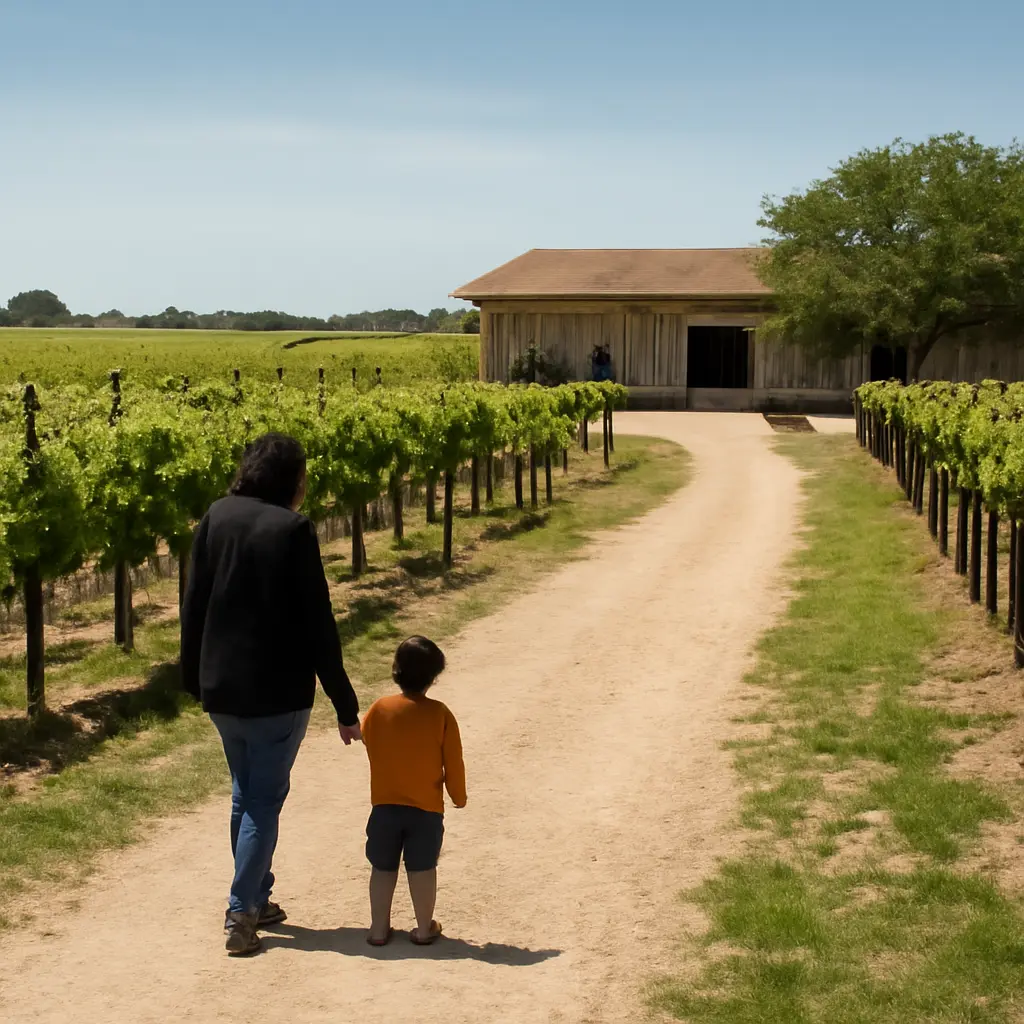
A family-friendly winery visit is a planned tasting-room or vineyard outing that makes room for children’s needs as well as adult interests. Your first trip doesn’t have to be messy: choose a winery that welcomes families, keep the visit short, bring snacks and quiet activities, and set clear expectations before you arrive. Those basics matter because wineries are working environments with glassware, equipment, uneven ground, and alcohol service—not ordinary playgrounds—and family policies vary by property.
Plan a family-friendly winery visit around safety and fit
There is no single industry-wide definition of a “family-friendly winery.” In practical terms, it is a winery whose rules and setting allow children to accompany adults safely, with suitable space or activities and a clear understanding that minors cannot consume alcohol. The U.S. Alcohol and Tobacco Tax and Trade Bureau (TTB) regulates alcohol production and labeling, while state and local laws govern important details of alcohol service and minors’ presence. As a result, wineries set their own admission, supervision, and tasting-room policies.
That variation makes advance research more useful than assuming children are welcome everywhere. Look for explicit family policies, outdoor seating, food options, accessible restrooms, and room to move without entering production areas. A property described as welcoming children may still require them to stay with an adult at all times.
Check the winery’s rules before booking
A winery’s visitor policy explains whether children may enter, which areas they can use, and whether reservations or age limits apply. Check the winery’s own website or contact staff directly; ask about outdoor seating, stroller access, food, tours, and rules for dogs or large groups. Confirm the policy again when booking, since event-specific rules can differ from ordinary visiting hours.
The Wine Institute’s California winery tourism guidance and regional wine-trail directories can help identify visitor experiences, but the individual winery remains the authoritative source for its current policy. If a venue says it is adults-only or unsuitable for children, choose another stop rather than treating the restriction as negotiable.
Choose a setting that fits your children
A vineyard picnic area, garden, or spacious patio may be easier for a family than a quiet indoor tasting room. Consider children’s ages, mobility, sensory needs, and tolerance for waiting. A property with food, shade, accessible paths, and nearby restrooms can make a short visit more comfortable; however, outdoor space is not automatically a play area, and vines, ponds, farm equipment, and service roads still require supervision.
For a first outing, select one winery rather than planning a full-day tasting itinerary. The National Park Service’s family trip-planning guidance emphasizes preparing around the needs and abilities of the people going; the same principle applies here. A flexible plan is easier to adjust if a child gets tired or the setting proves less suitable than expected.
Prepare children for winery safety and behavior
Winery safety means preventing children from accessing alcohol, fragile glassware, hot or moving equipment, and restricted work areas. Winery visits can include tasting bars, fermentation tanks, forklifts, tractors, hoses, slippery floors, and uneven vineyard terrain. These are normal features of a working agricultural business, so close adult supervision is essential even at a venue that welcomes families.
Before the visit, explain that a winery is a place where adults make and taste wine—not a playground. Give children simple rules: stay beside an adult, do not touch bottles or glasses, and never enter a marked staff-only area. A calm, brief visit is more likely when children know what to expect and adults are ready to leave if the environment stops working for them.
Set age-appropriate expectations
Age-appropriate expectations are simple, specific instructions matched to a child’s developmental stage. A preschooler may need a close handhold and frequent movement breaks; an older child may manage a short seated activity while an adult orders. Avoid promising that children can roam or play unless the winery has designated a supervised space and staff have confirmed it is available.
The Centers for Disease Control and Prevention (CDC) notes that alcohol use by people under 21 carries health and safety risks, and U.S. states generally set 21 as the minimum legal drinking age, subject to limited state-specific exceptions. For a winery outing, the practical rule is straightforward: minors do not taste or drink wine, and adults should follow the winery’s policy and applicable law.
Keep children away from alcohol and hazards
Active supervision means an adult remains attentive and close enough to intervene—not merely somewhere on the property. Keep children away from tasting pours, unattended glasses, bottle displays, production equipment, and vehicle routes. Do not leave a child with another visitor or assume staff are responsible for supervision.
The Occupational Safety and Health Administration (OSHA) identifies agricultural workplaces as settings with machinery and other occupational hazards. Although visitor rules differ from employee safety standards, that context reinforces why families should respect barriers, signs, and staff instructions. If a tour passes through production areas, ask whether children may join and whether the route is appropriate for them.
Pack for comfort, food, and a short visit
A prepared winery outing includes water, weather-appropriate clothing, a small snack or a confirmed meal plan, and a quiet activity that does not create extra mess. Before bringing outside food, check the property’s policy; some wineries permit picnics, while others sell food or prohibit outside items. Packing with the visit’s length and setting in mind helps prevent hunger, boredom, and avoidable spills.
Bring practical supplies, not a whole playroom
A compact family kit is easier to manage around glass and other guests. Consider water bottles with secure lids, wipes, tissues, sunscreen, hats, a light layer, and a small bag for rubbish. Choose quiet, low-mess entertainment such as a picture book, drawing pad, or travel game, and avoid toys that roll, make noise, or invite running.
- Check the forecast and dress children for sun, wind, or changing temperatures.
- Bring snacks only if allowed, and avoid foods likely to stain or crumble.
- Use a stroller only after confirming paths, steps, and indoor access.
- Carry any essential medication and know where the nearest restroom is.
Plan around meals and realistic timing
A realistic first visit is short enough to fit a child’s attention span and the winery’s service pace. Book an early or less-busy time if available, arrive with children rested and fed, and set a departure point before anyone becomes overtired. The exact duration depends on the children and venue; there is no research-backed universal “ideal” winery visit length.
If the winery offers food, verify the menu and service hours rather than assuming a child-friendly meal will be available. If adults plan to taste, arrange a designated driver or another safe transport option in advance. The National Highway Traffic Safety Administration (NHTSA) stresses that alcohol and driving do not mix; do not rely on a child’s presence or a small tasting pour as a reason to drive after drinking.
Make the tasting enjoyable for adults without burdening children
A family visit works best when adult tasting plans remain modest and the children’s needs stay central. Ask whether the winery can seat your group comfortably, whether non-alcoholic options are available, and whether one adult can taste while another supervises. If the only available experience is a long, quiet seated flight, it may be better to choose a different venue or arrange childcare.
Choose a tasting format that allows flexibility
A flexible tasting format may include outdoor seating, shorter flights, food service, or the option for adults to take turns tasting. These are venue-specific offerings, not guaranteed features, so confirm them when reserving. If children become restless, step away from the tasting area rather than expecting other guests or staff to accommodate disruption.
For example, a family might reserve a patio table, bring a permitted snack, and have one adult supervise while the other samples a flight, then switch. This simple arrangement reduces the time children spend waiting and keeps an adult focused on them. It is an illustration rather than a universal winery policy; always follow the venue’s rules.
Respect other visitors and winery staff
Considerate visiting means keeping voices and movement appropriate to the setting, supervising children continuously, and following staff directions promptly. Do not let children handle glassware, approach other guests’ tables, or enter work areas. If a child is upset or needs to move, take a break outside or end the visit; leaving early is a responsible choice, not a failed outing.
Wineries are both hospitality businesses and places of production. Respecting that dual role helps protect children, employees, and other guests while allowing families to enjoy the landscape and learn about agriculture. A positive first visit is measured by safety and comfort—not by how many tastings adults complete.
Conclusion: A calm first winery trip starts with a plan
Your first winery trip with children can be enjoyable and manageable when you confirm the winery’s policy, choose a setting suited to your family, explain safety expectations, pack lightly, and keep the visit short and flexible. Children must remain supervised and away from alcohol, glassware, equipment, and restricted areas; adults should plan safe transportation if they taste. Before you go, check the winery’s current visitor information and make a simple backup plan. A thoughtful first outing can introduce children to vineyards and food culture without turning the day into a mess.
Sources: Alcohol and Tobacco Tax and Trade Bureau, About TTB, https://www.ttb.gov/about-ttb; Wine Institute, Winery and Wine Country Tourism, https://wineinstitute.org/our-industry/wine-country-tourism/; Centers for Disease Control and Prevention, Underage Drinking, https://www.cdc.gov/alcohol/underage-drinking/; Occupational Safety and Health Administration, Agriculture, https://www.osha.gov/agricultural-operations; National Park Service, Plan Like a Park Ranger, https://www.nps.gov/articles/000/plan-like-a-park-ranger.htm; National Highway Traffic Safety Administration, Drunk Driving, https://www.nhtsa.gov/risky-driving/drunk-driving