
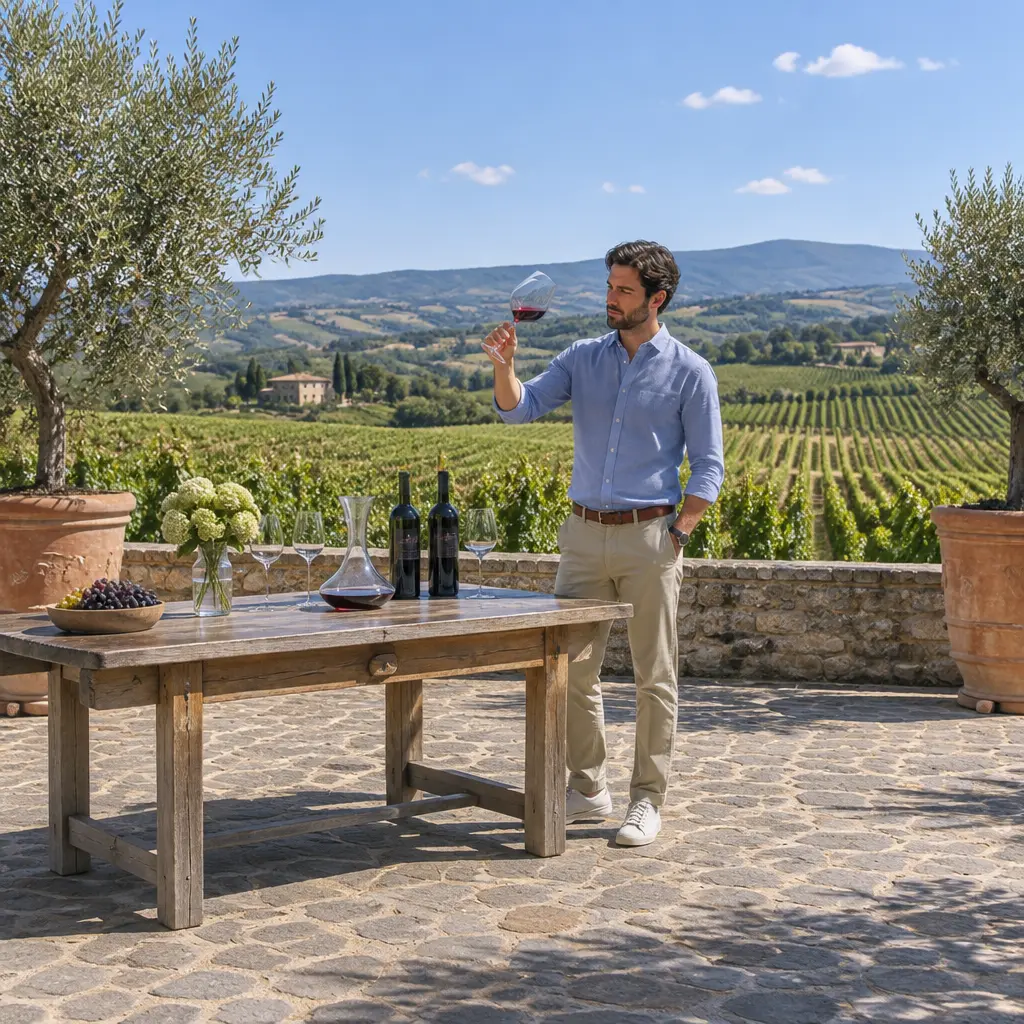
Wine tasting is a way to assess a wine’s appearance, aromas, flavors, and overall structure using your senses. Each time you taste, notice five things: color and clarity, aromas, acidity, tannin and body, and finish. These observations connect to the Court of Master Sommeliers’ systematic approach to tasting and help explain why two wines made from different grapes, regions, or techniques can feel so distinct. You don’t need specialist equipment: a glass, a small pour, and a moment of attention can make tasting more informative and enjoyable.
Notice the appearance of wine before tasting
Appearance means the wine’s visible color, clarity, and—in sparkling wines—bubbles. The Wine & Spirit Education Trust (WSET) includes appearance as the first step in its structured tasting approach, because it can offer clues about a wine’s style and development. It is a starting point, not a reliable way to identify a grape or judge quality on its own.
Color and intensity
Hold the glass against a light or pale background and look at the wine’s color and depth. White wines can range from nearly colorless through lemon and gold; reds can range from pale ruby to deep purple. Hue and intensity may reflect grape variety, ripeness, winemaking, or age, but no single color proves a wine’s origin or quality. For example, a young Cabernet Sauvignon often appears deeper in color than a light-bodied Pinot Noir, though growing conditions and winemaking also matter.
Clarity and bubbles
Clarity describes whether a wine looks clear or hazy. Some wines are intentionally unfiltered and may show sediment without being faulty; in older bottles, sediment can also develop during aging. In sparkling wine, observe whether bubbles are present and how they rise, but treat their size and persistence as observations rather than a stand-alone quality test.
Notice the aromas of wine by smelling before sipping
Aroma is the set of smells perceived when you bring wine to your nose. WSET’s tasting method considers the nose before the palate, helping tasters describe fruit, floral, herbal, spice, and other scent characteristics. Smell gently before and after swirling: swirling releases volatile aroma compounds, while repeated, unhurried sniffs can reveal more than one impression.
Fruit, floral, and herbal aromas
Look for broad aroma families rather than trying to guess an exact ingredient. A Sauvignon Blanc might suggest citrus, green fruit, or herbs; a Riesling may evoke citrus or stone fruit; and a Syrah may suggest dark fruit or pepper. These are examples, not fixed rules: climate, ripeness, fermentation, and aging can change what a wine smells like.
Oak, aging, and unusual smells
Some aromas come from winemaking and maturation rather than the grape alone. Oak aging can contribute impressions such as vanilla, toast, or spice, while bottle age may bring more developed notes. Also notice whether an aroma seems clean and pleasant or unusually musty, vinegary, or otherwise off. A smell can raise a question, but confirmation may require tasting and context; unfamiliar does not automatically mean faulty.
Notice acidity in wine through freshness and salivation
Acidity is the taste-related sensation that gives wine freshness and can make your mouth water. The International Organisation of Vine and Wine (OIV) defines total acidity analytically as the sum of titratable acids measured under specified conditions; that laboratory measure is related to, but not identical to, how acidity feels to a taster. When tasting, consider whether the wine seems low, moderate, or high in acidity and whether that freshness balances its fruit, sweetness, and body.
How acidity feels
Take a small sip and notice whether your mouth waters, especially along the sides. A high-acid wine often feels crisp and lively, while a lower-acid wine may seem softer or rounder. Acidity is not the same as sourness alone, and a wine with pronounced acidity can still be balanced if its fruit and other elements support it.
Acidity in context
Acidity helps shape a wine’s relationship with food. Fresh, high-acid wines can work well with rich dishes because their crispness provides contrast, while acidity can also complement tart ingredients. As a practical example, compare a crisp Riesling with a softer, rounder Chardonnay: the difference in perceived freshness may be easier to notice than any technical measurement.
Notice tannin and body as separate parts of wine’s structure
Tannin and body both affect texture, but they describe different sensations. Tannin is a group of phenolic compounds that can create a drying or grippy feeling; body is the impression of weight or fullness in the mouth. The OIV’s terminology distinguishes analytical wine properties from sensory descriptors, a useful reminder that a tasting note describes perception rather than a lab result.
Tannin and dryness
After a sip of red wine, notice whether your gums, tongue, or cheeks feel dry or slightly rough. That sensation is associated with tannin, which can come from grape skins, seeds, stems, and oak. A Cabernet Sauvignon often has more noticeable tannin than a low-tannin red such as Gamay, though the wine’s growing and production conditions influence the result. Tannin is not the same as dryness in the sense of sugar: a dry wine has little residual sweetness, while a tannic wine feels drying in texture.
Body and weight
Body describes how light or full a wine feels, much as skimmed and whole milk differ in perceived richness. Alcohol, concentration, sweetness, acidity, and winemaking can all influence that impression. Try comparing a light-bodied Pinot Noir with a fuller-bodied Shiraz, while remembering that grape names are guides, not guarantees. A simple tasting chart could plot acidity from low to high on one axis and body from light to full on the other, helping you compare wines without confusing the two.
Notice the finish and overall balance after each sip
The finish is the flavor and sensation that remain after swallowing or spitting. In WSET’s structured approach, tasters consider the palate’s length and quality alongside other elements. Notice what lingers, how long it lasts, and whether the wine’s fruit, acidity, tannin, alcohol, and sweetness feel harmonious. A long finish is an observation, not automatic proof of quality; balance and personal preference matter too.
Length and lingering flavors
After the sip, pause before taking another. Does the wine’s fruit disappear quickly, or do fruit, spice, acidity, or tannin persist? You can describe the finish in plain language—for example, “short and citrusy” or “long with dark fruit and firm tannin.” There is no need to time every sip; consistent comparisons are more useful than false precision.
Balance and personal preference
Balance describes how a wine’s components work together. High acidity can feel refreshing when supported by fruit, and noticeable tannin can suit a concentrated red, while excess alcohol or sweetness may stand out when other elements do not provide balance. Record what you enjoy as well as what you detect: tasting is both a sensory exercise and a personal experience.
Conclusion: Use five observations to taste wine more attentively
A useful wine-tasting routine moves from appearance to aroma, then to acidity, tannin and body, and finally the finish. Together, these five observations provide a consistent vocabulary for comparing wines without treating color, grape variety, or one isolated sensation as a verdict. Next time you open a bottle, take a small pour, notice each element, and jot down a few words. For further learning, explore the structured tasting resources published by WSET and the Court of Master Sommeliers.
Sources: Wine & Spirit Education Trust, Tasting wine, https://www.wsetglobal.com/knowledge-centre/tasting-wine/; Court of Master Sommeliers, Deductive Tasting Method, https://www.mastersommeliers.org/about-sommeliers/deductive-tasting-method/; International Organisation of Vine and Wine, International Code of Oenological Practices, https://www.oiv.int/standards/international-code-of-oenological-practices; International Organisation of Vine and Wine, Compendium of International Methods of Wine and Must Analysis, https://www.oiv.int/standards/compendium-of-international-methods-of-wine-and-must-analysis.