
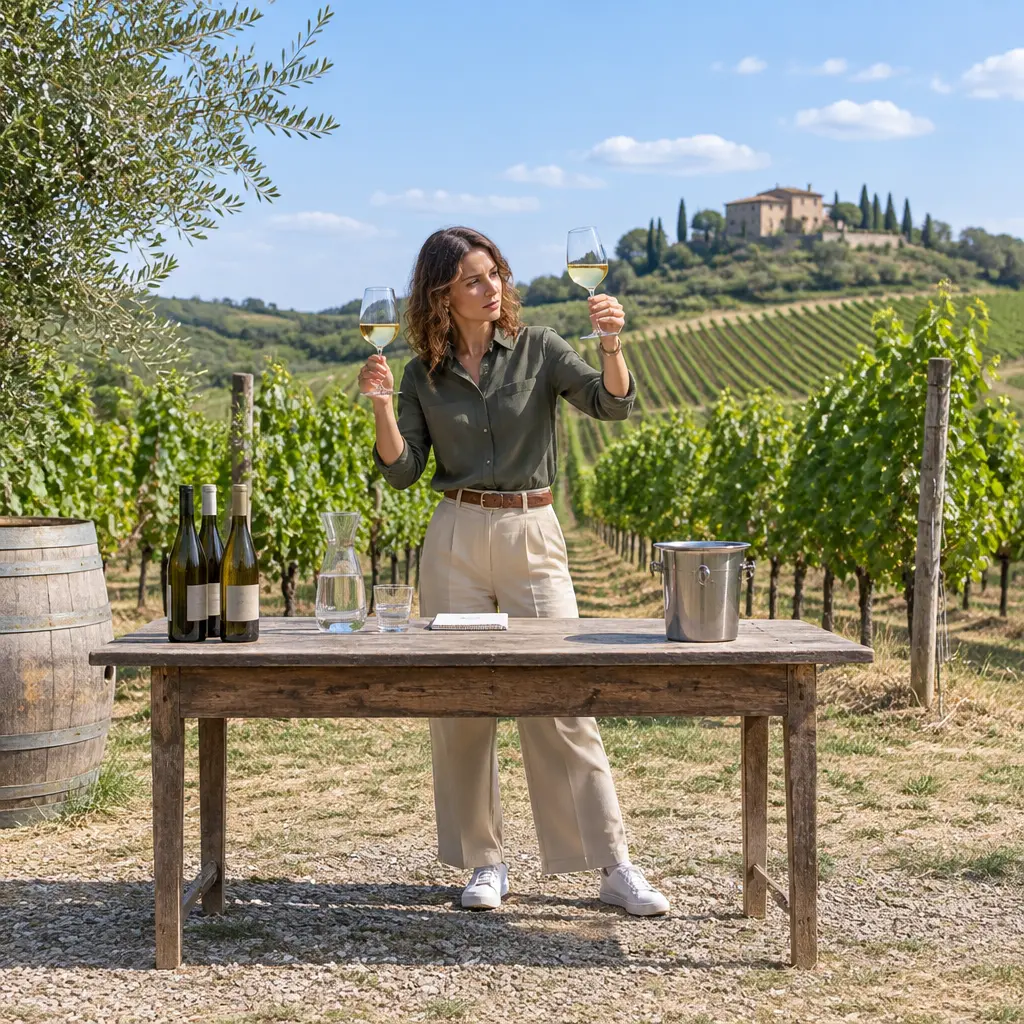
Muscat and Riesling are aromatic white-wine grapes, but they express aroma differently: Muscat commonly evokes fresh grapes and floral notes, while Riesling is associated with citrus, stone fruit, and, with age, distinctive petrol-like aromas. Both can be made in styles ranging from dry to sweet, so grape variety alone does not determine sweetness. Comparing their aromas, acidity, production choices, and regional examples helps explain why these grapes offer different experiences—and why aroma is central to how drinkers understand white wine.
Aromatic expression of Muscat compared with Riesling
An aromatic wine is one whose varietal character is strongly conveyed through smell. In its technical materials on wine aroma, the International Organisation of Vine and Wine (OIV) describes aroma compounds as volatile substances that contribute to wine’s smell; some originate in grapes, while others develop during fermentation and aging. Muscat and Riesling are both recognized for expressive grape-derived aromas, but their typical scent profiles and structures differ.
Muscat is the name used for a large family of grape varieties, including Muscat Blanc à Petits Grains and Muscat of Alexandria. The OIV’s International List of Vine Varieties documents grape varieties and their synonyms, underscoring that “Muscat” does not refer to one single, uniform grape. Riesling, by contrast, is a distinct variety. Wine references such as Jancis Robinson’s The Oxford Companion to Wine describe Muscat as particularly recognizable for its grapey, floral character, while Riesling is commonly associated with citrus and orchard fruit, high acidity, and strong responses to site and ripeness.
Muscat: floral, grapey, and often immediately recognizable
Muscat’s defining aromatic impression is often close to the smell of fresh grapes. Depending on the variety, ripeness, and winemaking, tasters may also notice orange blossom, rose, peach, citrus, or spice. Muscat grapes contain aroma precursors and volatile compounds that help create this vivid varietal character. Because the aroma can remain conspicuous in the finished wine, Muscat is often described as overtly perfumed rather than subtle.
Muscat styles include dry still wines, gently sparkling wines, and sweet wines made by stopping fermentation or concentrating grape sugars. Asti, produced in Italy’s Piedmont region primarily from Moscato Bianco, is a well-known sparkling example. Muscat de Beaumes-de-Venise in France is a fortified sweet-wine example. These styles show why “Muscat” does not automatically mean one sweetness level or one texture.
Riesling: citrus, orchard fruit, and acidity
Riesling’s aromas commonly include lime, lemon, green apple, peach, and floral notes; warmer conditions and greater ripeness can bring more stone-fruit character. Its high acidity is a key structural feature, helping dry examples feel brisk and allowing sweet examples to remain lively rather than simply heavy. The German Wine Institute describes Riesling as a variety whose style varies substantially with climate, ripeness, and production choices.
Riesling is made across a broad range of sweetness levels, from dry wines labeled “trocken” in Germany to intensely sweet late-harvest and botrytized wines. Germany’s Prädikat categories describe grape must weight at harvest, not a guaranteed finished-wine sweetness level; fermentation decisions determine how much sugar remains. This distinction matters when comparing Riesling with Muscat: aroma and perceived sweetness are related in some wines, but they are not interchangeable measures.
Aroma compounds and sensory differences in Muscat and Riesling
The contrast between these grapes is not simply “floral versus fruity.” Aroma arises from many compounds interacting with acidity, alcohol, residual sugar, fermentation, and serving conditions. Researchers and wine educators often distinguish primary aromas, which are grape-derived; fermentation aromas; and tertiary aromas, which emerge through bottle or barrel aging. That framework helps explain why young Muscat can smell vividly grapey, while mature Riesling may develop a more complex mix of fruit, mineral impressions, and aging aromas.
Terpenes and Muscat’s floral character
Terpenes are a family of aroma compounds found in grapes and other plants. Certain terpenes, including linalool and geraniol, are associated with floral and citrus-like impressions and are important to the characteristic fragrance of Muscat varieties. Their concentrations vary among Muscat types and with grape-growing conditions, so the family’s wines range from lightly scented to intensely perfumed.
The term “grapey” is a useful sensory shorthand, not a claim that every Muscat wine tastes identical to table grapes. Dry examples can emphasize flowers, citrus, and herbs, whereas sweeter or sparkling examples may make ripe fruit aromas seem more pronounced. Alcohol and residual sugar also influence how a wine’s aroma and flavor are perceived.
Riesling’s fruit spectrum and bottle-age aromas
Riesling’s aroma profile reflects both grape ripeness and growing conditions. Cooler-climate wines often emphasize citrus, green apple, and high-toned floral notes; riper fruit can bring peach and apricot. With bottle age, some Rieslings develop a kerosene- or petrol-like scent, commonly linked to the compound TDN, or 1,1,6-trimethyl-1,2-dihydronaphthalene. The aroma’s intensity varies and is not a reliable measure of wine quality.
Riesling can also develop honeyed, dried-fruit, or waxy notes as it ages, particularly in wines made from very ripe or botrytized grapes. These aromas do not erase the variety’s underlying acidity; instead, they add layers to it. Compared with Muscat’s typically direct floral and grape-like signature, aged Riesling often offers a wider evolution from fresh fruit toward savory and mature aromas.
Sweetness, acidity, and winemaking choices
A useful comparison separates the grape’s aroma from the wine’s balance. Residual sugar is the sugar left after fermentation, while acidity contributes freshness and can make sweetness feel less pronounced. The OIV’s International Code of Oenological Practices recognizes different wine-making treatments and styles, but the sensory outcome depends on the producer’s choices as well as the fruit.
Dry, off-dry, and sweet examples
Both varieties can produce dry and sweet wines. Muscat’s strong fragrance may make a dry wine seem fruitier than it is, while Riesling’s acidity can balance substantial residual sugar. For consumers choosing by taste rather than grape name, the label’s sweetness indication, producer information, or retailer description is more useful than assuming that either variety is always sweet.
Sparkling Muscat also illustrates the range: carbonation lifts aromas and adds a brisk texture, while the wine’s sweetness depends on its production and final sugar level. Riesling appears as still and sparkling wine too, with sparkling versions ranging from dry to noticeably sweet. These examples show that grape identity sets an aromatic foundation, not a fixed recipe.
Climate, harvest timing, and fermentation
Climate and harvest timing affect sugar accumulation, acidity, and aroma development. Cooler sites can preserve acidity and favor citrus or green-fruit impressions, while warmer conditions and later harvest may increase ripeness and shift the balance toward peach, apricot, or other ripe-fruit notes. Vineyard exposure, water availability, and vintage conditions also influence the result.
Fermentation choices shape texture and aroma as well. Yeast selection, fermentation temperature, contact with grape solids, and aging vessel can affect the wine’s aromatic expression. In sweet wines, fermentation may be stopped before all sugars are converted to alcohol; in dry wines, fermentation proceeds further. These choices are why two wines from the same grape can differ substantially even when they share a region.
Regional examples and practical comparisons
Geography offers a practical way to see the distinction between the grapes. Muscat’s many varieties are cultivated widely, with recognizable traditions in Italy, France, and Australia. Riesling has prominent expressions in Germany, Alsace, Austria, Australia, and other regions. Regional names, grape synonyms, and local rules can complicate labels, so checking the stated variety and origin helps clarify what is in the bottle.
Muscat examples: Asti and fortified Muscat
Asti DOCG, made in Piedmont from Moscato Bianco, is a sparkling-wine example known for aromatic fruit and floral notes. Its production rules and style distinguish it from dry still Muscat. Muscat de Beaumes-de-Venise, from the southern Rhône, is a fortified wine whose sweetness and concentrated fragrance offer a contrasting expression of the grape family. Together, these examples demonstrate how one broad grape name covers distinct wine traditions.
Riesling examples: Germany and Alsace
German Riesling ranges from dry wines to sweet Prädikat wines, with acidity often providing a pronounced sense of freshness. In Alsace, Riesling is frequently made as a dry, still wine, though the region also produces richer styles. Comparing these regions shows that Riesling’s aroma is shaped not only by the grape but also by climate, ripeness, labeling conventions, and producer choices.
A simple tasting comparison
To compare the varieties, taste wines at similar temperatures and in similar glassware, beginning with aroma before assessing sweetness and acidity. A dry Muscat beside a dry Riesling can reveal the difference between Muscat’s floral, fresh-grape character and Riesling’s citrus-and-orchard-fruit profile. A sweet example of each then shows how acidity and sugar alter the same basic comparison. A chart could summarize the contrast across aroma, acidity, sweetness range, and aging potential, while noting that these are typical tendencies rather than rules.
Conclusion: choosing between Muscat and Riesling
Muscat and Riesling are both aromatic white-wine grapes, yet their typical signatures differ: Muscat is especially associated with floral and fresh-grape aromas, while Riesling commonly combines citrus and orchard fruit with marked acidity and the potential to develop mature, petrol-like notes. Neither grape has a single sweetness level. Variety, climate, harvest, fermentation, and aging all shape the wine in the glass.
For a vividly perfumed, often immediately expressive wine, explore Muscat styles such as Asti or dry Muscat. For a grape that spans crisp dry wines and age-worthy sweet examples, compare Rieslings from different regions and sweetness categories. Further reading from the OIV, the German Wine Institute, and regional wine bodies can help decode varieties, labels, and production terms; the most useful next step is to taste representative wines side by side.
Sources: International Organisation of Vine and Wine, International List of Vine Varieties, https://www.oiv.int/what-we-do/viticulture/international-list-of-vine-varieties; International Organisation of Vine and Wine, International Code of Oenological Practices, https://www.oiv.int/standards/international-code-of-oenological-practices; Jancis Robinson and Julia Harding, eds., The Oxford Companion to Wine, Oxford University Press, https://www.oxfordcompaniontowine.com/; German Wine Institute, Riesling, https://www.germanwines.de/our-wine/grape-varieties/riesling/; Consorzio dell’Asti DOCG, Asti DOCG, https://www.astidocg.it/en/; Syndicat des Vignerons de Beaumes-de-Venise, Muscat de Beaumes-de-Venise, https://www.beaumes-de-venise.com/; Wine & Spirit Education Trust, Understanding wine aroma and tasting, https://www.wsetglobal.com/