
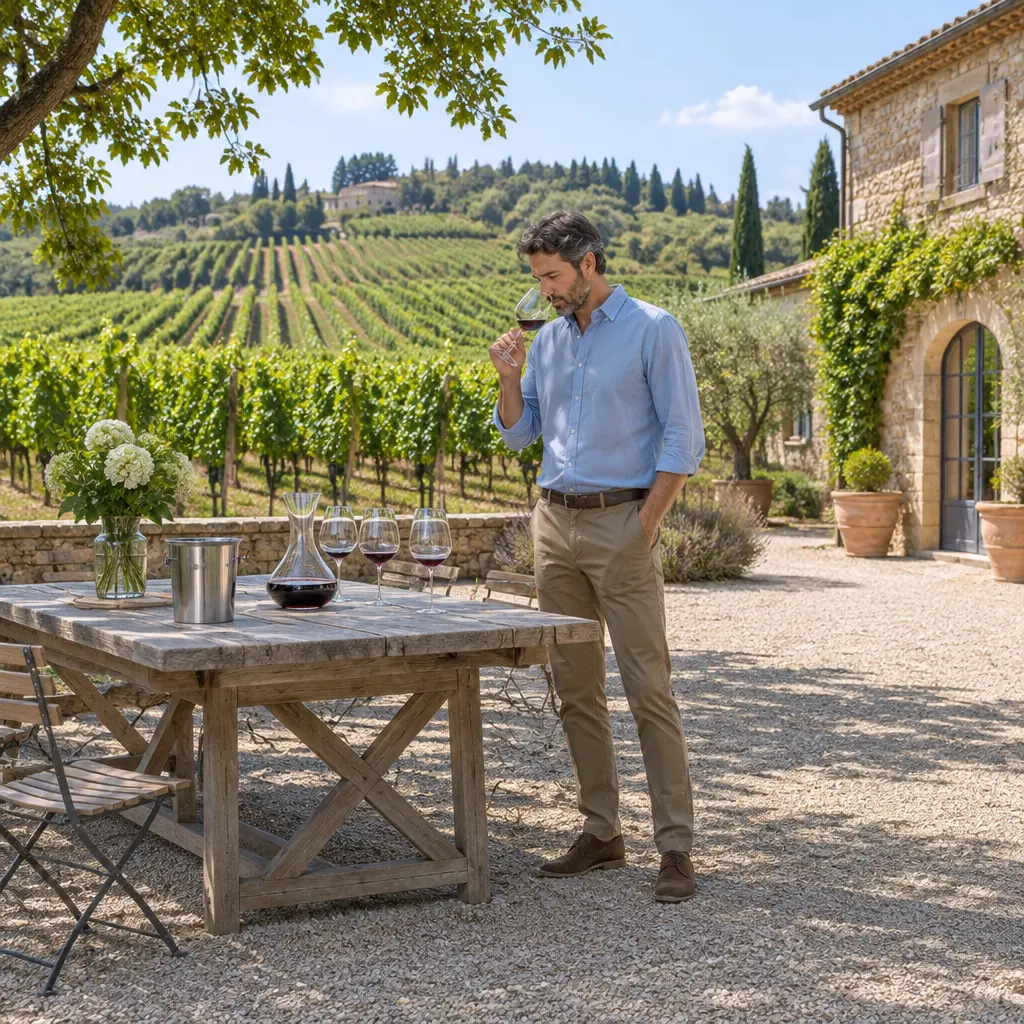
French wine tasting is more than a hunt for a prestigious bottle: it is a disciplined way to notice, describe, and compare wine in context. Shaped by regional traditions, food culture, and the French system of appellations, it connects sensory judgment to place and production. France’s National Institute of Origin and Quality (INAO) recognizes more than 360 wine and spirit appellations, illustrating how closely wine identity is tied to geography and rules. Understanding this approach clarifies what tasting rigor means, how French tasters evaluate wine, and what anyone can learn about attention, vocabulary, and thoughtful enjoyment.
French wine tasting as a practice of careful observation
Wine tasting is the deliberate assessment of a wine’s appearance, aromas, flavors, structure, and overall condition. The French do not all taste alike, and there is no single national ritual. But professional training and established tasting methods often emphasize observation before opinion: first identify what is present, then consider how the wine is balanced, where it may come from, and whether it is ready to drink.
This method matters because tasting is vulnerable to expectation. A famous label, a high price, or a striking bottle can shape what someone thinks they taste. A structured sequence gives tasters a shared vocabulary and a way to check impressions against evidence. It also makes tasting useful beyond wine: slowing down, comparing carefully, and explaining a judgment are skills that transfer to food, coffee, and other sensory experiences.
The French connection between wine and place
Terroir is the idea that a wine’s character reflects an interaction among its growing environment, grape variety, and human choices. The concept can include climate, soil, topography, vineyard practice, and local winemaking tradition. It is not a guarantee that every wine from a region tastes identical; rather, it offers a framework for understanding why wines from different places may show recurring characteristics.
France’s appellation system gives this idea practical form. INAO oversees protected designations of origin and geographical indications, with rules that can specify such matters as permitted varieties, geographic boundaries, yields, and production methods. The rules vary by appellation. They help establish what a place-name on a label means, while leaving room for differences among producers and vintages.
Why tasting is both sensory and cultural
A tasting note is an interpretation, not a laboratory result. Tasters use sensory evidence—such as acidity, tannin, aroma, and finish—to form a judgment, but experience and context influence the words they choose. French wine culture often places those judgments alongside regional identity, meals, and the conventions of a specific appellation. That makes tasting a conversation about how a wine is made and used, not simply whether someone likes it.
How French tasting principles shape wine evaluation
A practical French-style tasting follows a sequence: look, smell, taste, and assess. The sequence helps separate observation from conclusion. A taster may note a wine’s color and clarity, identify aromas, then evaluate acidity, sweetness, alcohol, tannin, body, flavor intensity, and finish. These features are considered together rather than treated as a checklist that automatically produces a score.
The method has useful hyponyms, or more specific forms: comparative tasting, blind tasting, professional assessment, and tasting at the table with food. Each answers a different question. Comparative tasting asks how wines differ; blind tasting tests whether sensory clues support an origin or variety; a professional assessment considers quality and condition; and food pairing explores how wine behaves in a meal.
Appearance: color, clarity, and age clues
Visual examination means noting the wine’s color, clarity, and intensity before tasting. White wines may deepen in color as they age, while red wines can become lighter or develop brick-like tones at the rim. These are clues, not proof of age or quality: grape variety, winemaking, storage, and oxidation can all affect appearance. The useful lesson is to describe what is visible without making a stronger claim than the evidence supports.
Aroma: identifying families rather than guessing
Aroma assessment begins with the wine’s smell before and after gentle swirling. Tasters often group impressions into families such as fruit, flowers, herbs, spices, earth, and oak. A Burgundy Pinot Noir, for example, might suggest red fruit and earthy notes, but those impressions vary with producer, vintage, and bottle development. Naming an aroma is most helpful when it is specific enough to communicate, yet honest about uncertainty.
Palate: balance, texture, and finish
On the palate, a taster considers sweetness, acidity, tannin, alcohol, body, flavor, and length. Balance describes how these elements relate; it does not mean that every element must be equally prominent. Tannin can feel drying or grippy, acidity can make a wine seem fresh, and alcohol can contribute warmth and weight. The finish is the impression that remains after swallowing or spitting. Together, these observations explain more than a simple “good” or “bad” verdict.
Why French wine tasting takes discipline
Rigor is valuable because a wine’s reputation can outrun the evidence in the glass. A structured tasting encourages people to describe the wine first, compare it with a reference, and only then consider its origin or prestige. Blind tasting is one way to reduce the influence of labels and price, though it cannot eliminate every bias. It is best understood as a test of observation, not a contest in confident guessing.
Regional benchmarks make comparison possible
A benchmark is a wine or style used as a point of comparison. Tasters might compare different Chablis wines to explore how producers express Chardonnay in a cool-climate region, or compare wines from neighboring Bordeaux appellations to notice differences in blend, structure, and setting. Such comparisons can reveal patterns, but they should not turn regional generalizations into rigid rules. Vintage conditions and winemaking choices matter.
Blind tasting separates evidence from expectation
In blind tasting, labels and other identifying details are concealed before evaluation. The method helps expose how packaging, price, and reputation can affect judgment. It also teaches humility: even trained tasters can disagree, and identifying a wine’s exact origin is harder than describing its structure and aroma. A useful blind-tasting note records confidence levels and evidence—for example, “high acidity and citrus aromas suggest a cool-climate white”—instead of presenting a guess as certainty.
Food pairing tests wine in its natural setting
French tasting is closely connected to eating. A wine’s acidity may work well with rich food, while tannin can feel different beside protein or salt. A crisp Muscadet with seafood is a familiar regional pairing; the point is not that it is the only correct choice, but that local foods and wines have often developed together. The table provides a real-world test of whether a wine is enjoyable and balanced in context.
What everyday drinkers can learn from the French approach
You do not need formal training, expensive glassware, or a cellar to taste more thoughtfully. The most transferable lesson is to replace snap judgment with a short sequence of observations. Pour a modest amount, take time to smell, notice how the wine changes, and describe its structure before deciding whether you enjoy it.
Use a simple tasting routine
A beginner can use four questions: What do I see? What do I smell? What do I notice on the palate? What remains after the sip? Record a few concrete terms—such as “lemon,” “high acidity,” or “light-bodied”—rather than reaching for elaborate language. Repeating the routine with two wines side by side makes differences easier to notice and gives tasting notes a clear purpose.
Learn regions without treating them as rules
Regional knowledge helps make labels more meaningful, but it should guide curiosity rather than dictate expectations. A label can identify a place and, under an appellation’s rules, signal certain production requirements. It cannot tell you everything about a particular producer, vintage, or bottle. Comparing wines from the same region—and then wines from different regions made from the same grape—helps distinguish place-related patterns from individual choices.
Make enjoyment the final measure
Technical vocabulary is useful when it improves communication, not when it intimidates. A wine can be well made and still not suit someone’s taste; a simple bottle can be memorable because it fits the meal or the moment. French tasting principles encourage informed attention, but they do not require everyone to reach the same verdict. The best assessment combines what the wine seems to offer with whether the drinker wants another glass.
Conclusion: take time, notice more, and taste with context
French wine tasting takes its reputation seriously because it joins sensory observation to regional identity, appellation rules, comparison, and food. Its core practices—examining appearance, assessing aroma and palate, tasting comparatively, and considering a wine with food—make judgments more precise without making enjoyment less personal. Try the method with two wines, write down a few observations, and explore the regions behind their labels. The goal is not to sound like an expert; it is to pay closer attention and understand what is in the glass.
Sources: Institut national de l’origine et de la qualité (INAO), “Les signes officiels d’identification de la qualité et de l’origine (SIQO),” https://www.inao.gouv.fr/les-signes-officiels-de-qualite-et-d-origine-siqo; OIV, “International Standard for the Labelling of Wines,” https://www.oiv.int/standards/international-standard-for-the-labelling-of-wines; Wine & Spirit Education Trust, “Systematic Approach to Tasting,” https://www.wsetglobal.com/knowledge-centre/blog/2020/may/19/a-systematic-approach-to-tasting-sat; International Organisation of Vine and Wine, “State of the World Vine and Wine Sector,” https://www.oiv.int/what-we-do/statistics