
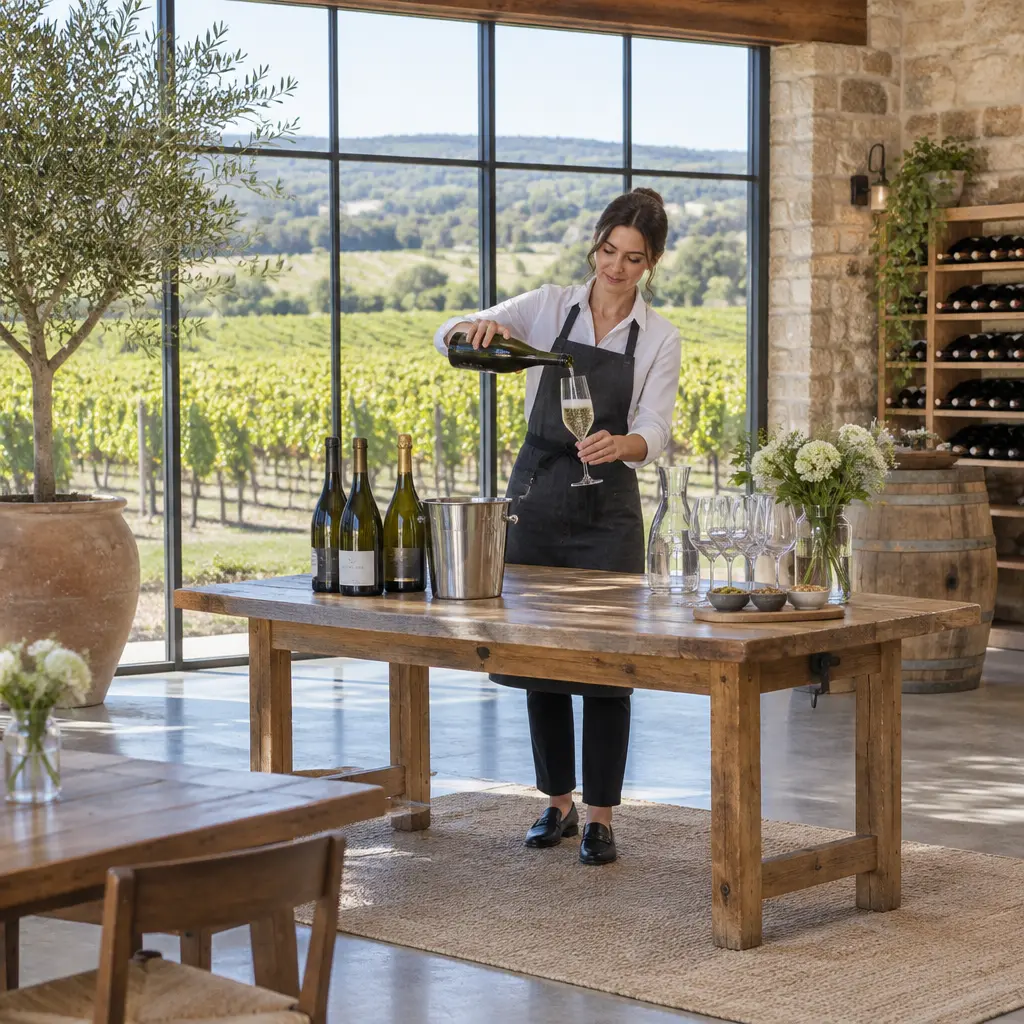
Sparkling wine service is the set of choices that preserve a wine’s bubbles, aroma, and balance while matching it to the occasion and the people drinking it. Before pouring, sommeliers weigh the wine’s style and condition, serving temperature, glassware, opening method, portion size, and food pairing. These decisions have practical consequences: the Comité Champagne recommends serving Champagne at 8–10°C (46–50°F), while the Wine & Spirit Education Trust notes that sparkling wines can lose freshness and bubbles if they are served too warm or handled carelessly.
Evaluate sparkling wine service through wine style and condition
Wine style and condition form a sommelier’s starting point: the wine’s sweetness, acidity, body, age, and production method help determine how it should be served. The Wine & Spirit Education Trust (WSET) describes sparkling wine as wine containing significant carbon dioxide, which creates bubbles when it is opened and poured. That broad category includes Champagne, Cava, Prosecco, English sparkling wine, and other traditional-method and tank-method wines; their differences matter because one service approach does not suit every bottle.
Production method, structure, and intended expression
Production method is the process that creates the bubbles and shapes a wine’s texture and aromas. In the traditional method, the second fermentation occurs in the bottle; in the tank method, it takes place in a pressurized tank. WSET explains that traditional-method wines commonly develop bready, biscuit-like aromas through contact with yeast lees, while tank-method wines are often made to emphasize fresh fruit. A sommelier may therefore choose a broader glass for an aromatic, complex Champagne and a more compact glass for a fresh, fruit-led sparkling wine.
Sweetness, acidity, and balance
Sweetness level indicates how much residual sugar remains in the wine, while acidity contributes freshness and helps balance that sweetness. The European Union’s Champagne and sparkling-wine labeling categories include Brut Nature, Extra Brut, Brut, Extra Dry, Dry, Demi-Sec, and Doux. The names are not intuitive: Extra Dry is sweeter than Brut. Sommeliers consider these categories alongside the wine’s actual flavor and the meal, since a slightly sweeter style may work better with spicy food or dessert than a very dry bottle.
Bottle condition and age
Bottle condition means whether the wine has been stored and handled well enough to retain its intended freshness and character. A sommelier checks for damage, leakage, unexpectedly high fill variation, or signs of heat exposure, and may inspect the cork and wine after opening. Older or vintage sparkling wines can show more developed aromas and may be more delicate, so they may call for careful opening and a glass that lets the wine’s aroma emerge without allowing it to warm too quickly.
Choose sparkling wine temperature and glassware to protect aroma
Temperature and glassware influence how quickly a wine releases aromas, how its acidity and sweetness are perceived, and how long its carbonation lasts. They are related choices: chilling can preserve freshness, while a glass that is too narrow may restrict aroma. The best service balances both, rather than treating a flute as compulsory or serving every sparkling wine at the coldest possible temperature.
Serving temperature
Serving temperature is the wine’s temperature when it reaches the glass. The Comité Champagne recommends 8–10°C (46–50°F) for Champagne. At warmer temperatures, the wine may seem less crisp and its bubbles can escape more readily; if it is too cold, aromas and flavors may be muted. Sommeliers may adjust within an appropriate range to suit the bottle: a straightforward, youthful wine may be served cooler, while a more complex bottle may benefit from being slightly less chilled.
Flute, coupe, or tulip
Glassware is the vessel’s shape and size, which affect aroma concentration, bubble display, and the rate at which wine warms. A flute emphasizes the rising stream of bubbles but offers limited space for aromas to gather. A coupe has a wide, shallow bowl that allows aromas to disperse quickly. A tulip-shaped glass provides more room for aroma while narrowing toward the rim, making it a useful middle ground. For a complex sparkling wine, a white-wine glass or tulip can reveal more detail than a narrow flute; for a celebratory toast, the flute may still suit the moment.
Cleanliness and glass preparation
Glass preparation means ensuring that the vessel is clean, odor-free, and free of residue that could interfere with the wine or its bubbles. Detergent traces, lint, and grease can affect aroma and appearance. Sommeliers use clean, polished glassware and avoid chilling glasses in a way that leaves frost or water droplets behind. The practical test is simple: the glass should not add an unwanted smell or flavor, and it should allow the wine to show clearly.
Open and pour sparkling wine with control
Opening and pouring are controlled service actions intended to keep the bottle safe and preserve carbonation. A sparkling-wine bottle contains pressure; the European Commission describes the minimum pressure for many quality sparkling wines at 20°C as 3 bars, with certain traditional-method wines at higher levels. Sommeliers therefore treat the cork as a potential hazard, keep it pointed away from people, and release it slowly rather than making a loud pop the goal.
Safe opening technique
Safe opening means controlling the cork while the bottle is angled away from people and fragile objects. The sommelier removes the foil, loosens the wire cage while keeping a thumb over the cork, and holds the cork steady while turning the bottle—not the cork—gradually. A quiet sigh signals a controlled release. This reduces the chance of injury and limits unnecessary loss of wine and carbon dioxide.
Pour size and service sequence
Pour size is the volume served at one time, and service sequence is the order in which guests receive their glasses. Sommeliers commonly pour in small stages rather than filling a glass to the brim, allowing the foam to settle and reducing spillage. Smaller pours also give guests the chance to drink the wine while it is fresh and cool. The exact amount depends on the venue’s service standard, glass capacity, and whether the wine is being offered as an aperitif, paired with a course, or served for a toast.
Preserving an open bottle
Preserving an open bottle means slowing the loss of dissolved carbon dioxide after service begins. A purpose-made sparkling-wine stopper can help retain pressure, and refrigeration slows the wine’s warming and changes in aroma. A spoon placed in the neck is not a reliable substitute for a pressure-sealing stopper. Sommeliers also consider how quickly the remaining wine will be served: a bottle intended for several courses needs more careful temperature and closure management than one poured immediately for a group.
Match sparkling wine service to food and occasion
Pairing and occasion help determine which bottle to open and how to present it. Sparkling wine’s acidity, carbonation, and range of sweetness can complement many foods, but the sommelier still considers intensity, texture, salt, spice, and sauce. The pairing should make both the wine and the dish taste more balanced rather than allowing one to overwhelm the other.
Food pairing and flavor intensity
Food pairing is the selection of a wine whose structure and flavors work with a dish. A crisp, dry sparkling wine can refresh the palate alongside fried foods, while a richer traditional-method wine may suit poultry, seafood, or dishes with creamy textures. A sweeter sparkling wine can be a more comfortable match for chili heat or fruit-based desserts than a very dry wine. These are starting points, not rules: seasoning, sweetness in a sauce, and the dish’s overall weight can change the result.
Occasion, guest preference, and responsible service
Occasion describes the setting and purpose of service, from a formal tasting to a wedding toast or a meal. Sommeliers weigh guests’ preferences, budget, bottle size, and the intended pace of drinking before recommending a wine. They also follow local alcohol-service rules and offer non-alcoholic alternatives when appropriate. A bottle chosen for a celebratory moment may prioritize broad appeal and presentation, while a guided tasting may favor a distinctive style that encourages discussion.
Conclusion: thoughtful sparkling wine service starts before the pour
Before pouring sparkling wine, sommeliers assess its style and condition, then tailor temperature, glassware, opening technique, pour size, and food pairing to the bottle and occasion. Those choices protect aroma and carbonation, support safe service, and help guests enjoy the wine as intended. For a practical next step, compare the same sparkling wine in a flute and a tulip-shaped glass, served at different suitable temperatures, and notice how the aroma and texture change. Consult the Comité Champagne and WSET for further guidance on styles and service.
Sources: Comité Champagne, How to Serve Champagne, https://www.champagne.fr/en/about-champagne/how-to-serve-champagne; Wine & Spirit Education Trust, Sparkling Wine, https://www.wsetglobal.com/knowledge-centre/blog/2020/december/18/sparkling-wine-explained; European Commission, Wine Sector: Sparkling Wines, https://agriculture.ec.europa.eu/farming/crop-productions-and-plant-based-products/wine_en; European Commission, Commission Delegated Regulation (EU) 2019/33, https://eur-lex.europa.eu/eli/reg_del/2019/33/oj.