
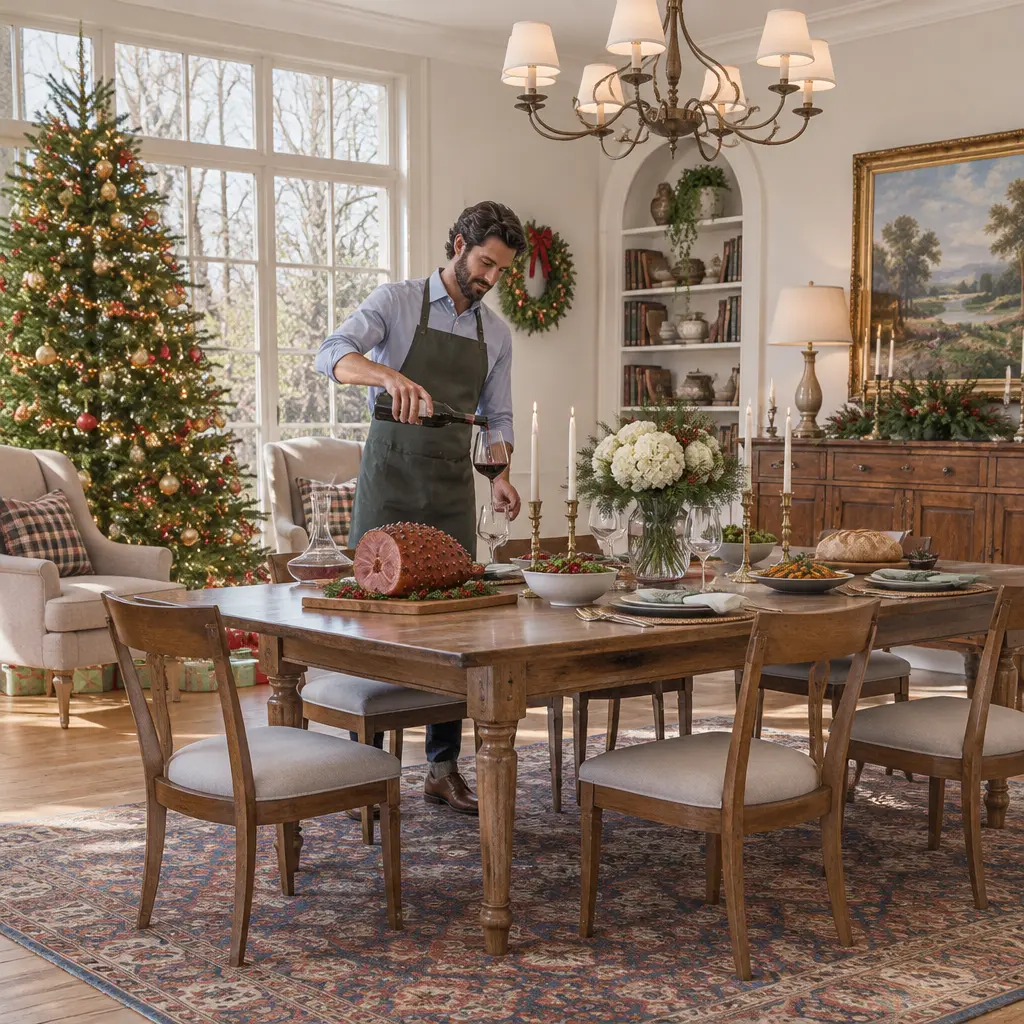
Wine pairing is the practice of choosing a wine whose flavors, acidity, sweetness, tannins, and body work well with a dish. For holiday ham, sommeliers start with the ham’s salt, smoke, sweetness, and richness—not a rigid rule that pork requires red wine. A lively sparkling wine or white can refresh the palate; a fruit-forward, low-tannin red can complement smoky or savory preparations. The best choice also depends on the glaze and sides. That approach reflects the dish’s real range: the USDA describes ham products that vary by curing and preparation, while the National Pork Board notes that pork’s flavor and texture depend on the cut and cooking method. Below, we explain the core pairing principles, match wines to common ham styles, and offer practical serving advice.
Pairing principles shape a sommelier’s approach to holiday ham
A sommelier is a wine professional who evaluates and serves wine, often advising diners on how a wine will interact with food. For ham, the task is to balance the dish’s most noticeable qualities: saltiness, sweetness, smoke, fat, and seasoning. The Court of Master Sommeliers’ educational materials emphasize evaluating wine through characteristics such as acidity, sweetness, tannin, body, and flavor intensity; applying those dimensions to ham is more useful than choosing by grape color alone.
The key pairing effects are practical. Acidity and bubbles can cut through fatty or salty bites, a touch of sweetness can soften salt and heat, and high tannin can seem drying or bitter beside salty foods. Fruit-forward wines often bridge the savory-sweet character of glazed ham. The result is not a single “correct” bottle, but a choice that suits both the ham and the rest of the meal.
Acidity and bubbles refresh rich, salty bites
Acidity is the tart, mouthwatering quality in wine; sparkling wine adds carbonation that can make a rich meal feel lighter. A dry traditional-method sparkling wine, such as Champagne, Crémant, or quality domestic sparkling wine, is a versatile starting point for salty ham. Its freshness contrasts with fat, while bubbles provide a palate-cleansing sensation. For a softer, fruitier match, rosé sparkling wine can echo the meat’s sweet-savory flavors.
A 2023 review in the journal Foods describes sparkling wine as a category shaped by secondary fermentation and carbon dioxide, with pressure and sensory profile varying by production method. At the table, those differences matter less than the basic effect: brisk acidity and effervescence can keep successive bites from feeling heavy. Choose a drier style when the glaze is very sweet, and a fruitier one when the ham is smoky or lightly seasoned.
Sweetness and fruit soften salt, spice, and glaze
A wine with a little residual sugar can reduce the impression of heat from mustard, cloves, or chili and harmonize with honey, brown sugar, or fruit glazes. German Riesling labeled off-dry or Kabinett, demi-sec Vouvray, and some rosés are useful examples. The goal is balance: wine that is markedly less sweet than the glaze may taste thin or sour beside it, while a moderately sweet wine can match the dish without becoming cloying.
The German Wine Institute explains that Riesling ranges from dry to sweet, and that the grape’s naturally high acidity can keep sweeter styles lively. This makes Riesling a particularly adaptable choice for ham with pineapple, apricot, or honey. Check the wine’s stated style or ask a retailer, since sweetness varies substantially between bottles and regions.
Tannin and body should fit the meat, not overpower it
Tannin is a drying, grippy sensation commonly associated with red wine; body describes the wine’s weight on the palate. Salty ham can accentuate the harshness of astringent tannins, so sommeliers often favor reds with moderate tannin, bright fruit, and enough acidity. Pinot Noir, Gamay, and some Grenache-based wines are common options. Serve them slightly cool rather than warm to emphasize freshness.
The Wine & Spirit Education Trust’s tasting framework treats acidity, tannin, sweetness, alcohol, and body as distinct structural elements. That framework helps explain why a light, juicy red can work where a heavily extracted, high-tannin Cabernet Sauvignon may dominate a sweet-glazed ham. A fuller red can still be appropriate with intensely smoked or peppered ham, especially if the meal includes savory, robust sides.
Ham style determines the most successful wine match
“Holiday ham” covers several preparations rather than one fixed flavor profile. The USDA Food Safety and Inspection Service distinguishes ham products by processing and labeling, including whether they are fresh, cured, smoked, or cooked. Those distinctions affect salt, smoke, and texture, so a sommelier first asks how the ham was made and what will accompany it. The following pairings are starting points, not strict rules.
Honey- or fruit-glazed ham
A sweet glaze brings sugar and often fruit acidity or spice to the plate. Off-dry Riesling, demi-sec sparkling wine, or a fruit-driven rosé can match that sweetness while retaining enough freshness for the meat. If the glaze is only lightly sweet, dry Chenin Blanc or a crisp Chardonnay may provide a cleaner contrast. Taste a bite with the wine before serving: if the wine suddenly seems sharp, the glaze may call for a sweeter style.
Smoked or heavily seasoned ham
Smoke adds savory intensity, while pepper, clove, and mustard can add warmth. Pinot Noir, Gamay, or a medium-bodied Grenache can complement these flavors without the weight of a highly tannic red. For white wine, try a dry or off-dry Riesling, Grüner Veltliner, or Chardonnay with enough body to stand up to the seasoning. A sparkling rosé is another flexible option when the menu mixes smoke, salt, and sweetness.
Country ham and other salt-forward styles
Dry-cured country ham is typically more concentrated and salt-forward than a mild, moist ham. High-acid whites, sparkling wines, and wines with modest sweetness are especially helpful because they refresh the palate and counter the salt. Avoid assuming that a powerful red is necessary: a leaner red may be more refreshing, while a sweet wine can work if the ham is served with fruit or a sweet accompaniment.
For a real-world menu, consider a buffet with glazed ham, mustard, rolls, and both sweet and savory sides. A brut sparkling wine is a broad-appeal opening bottle; an off-dry Riesling covers the glaze and mustard; and a lightly chilled Pinot Noir offers a red option. This three-style approach lets guests match their own plate instead of asking one wine to suit every flavor.
Serving choices complete the sommelier’s ham pairing
Account for sides and sauces
The wine meets the whole bite, not just the ham. Cranberry sauce, pineapple, sweet potatoes, mustard, salty gravy, and rich casseroles can shift the balance. When the plate includes several contrasting flavors, choose a flexible wine with acidity and moderate alcohol—such as sparkling wine, Riesling, or rosé—rather than a delicate wine that could disappear or a powerful wine that dominates.
Serve at a temperature that preserves freshness
Serving temperature changes how wine feels: excessive warmth can make alcohol seem more prominent, while very cold temperatures can mute aroma and flavor. The Wine & Spirit Education Trust recommends serving styles according to their structure rather than treating all reds or whites alike. As a practical guide, chill sparkling wines and whites, and serve lighter reds somewhat cooler than room temperature. Follow the producer’s guidance when available, and adjust to the room and guests’ preference.
Offer options instead of over-optimizing one bottle
For a large holiday gathering, variety is often more useful than an elaborate single pairing. Provide one sparkling wine, one aromatic white with a hint of sweetness, and one light- or medium-bodied red. Label bottles clearly and offer nonalcoholic sparkling drinks as well. The National Institute on Alcohol Abuse and Alcoholism advises that alcohol affects people differently and that lower consumption reduces alcohol-related risk; guests should be able to choose a nonalcoholic option without pressure.
Conclusion: balance makes holiday ham pairing personal
A sommelier’s approach to holiday ham begins with the wine’s acidity, sweetness, tannin, and body, then considers whether the ham is glazed, smoked, or salt-forward. Sparkling wine refreshes rich bites, a little sweetness can harmonize with glaze and spice, and fruit-forward reds offer a red-wine alternative with less drying tannin. Sides and serving temperature matter, too. Start by tasting the ham and its glaze, then choose two or three styles that give guests options. For further guidance, consult the USDA’s ham-labeling and food-safety resources, wine education materials from WSET, and regional wine guides before planning your menu.
Sources: USDA Food Safety and Inspection Service, Ham and Food Safety, https://www.fsis.usda.gov/food-safety/safe-food-handling-and-preparation/meat/ham-and-food-safety; Court of Master Sommeliers Americas, Introductory Sommelier Course, https://www.mastersommeliers.org/education/introductory-sommelier-course; Wine & Spirit Education Trust, Tasting and Evaluating Wine, https://www.wsetglobal.com/knowledge-centre/blog/2020/july/23/how-to-taste-wine; German Wine Institute, Riesling, https://www.winesofgermany.com/our-wine/grape-varieties/grape-variety/18/riesling; National Pork Board, Pork Cuts and Cooking, https://pork.org/cuts/; National Institute on Alcohol Abuse and Alcoholism, Drinking Levels Defined, https://www.niaaa.nih.gov/alcohol-health/overview-alcohol-consumption/moderate-binge-drinking; Foods, Sparkling Wine: Production, Composition and Sensory Characteristics, 2023, https://www.mdpi.com/journal/foods